
Sleep Apnoea Treatment
SLEEP APNOEA: SYMPTOMS & DIAGNOSIS
Sleep Apnoea Treatment Melbourne CBD
Snoring is more than just a noise made while sleeping – it is the soft palate vibrating indicating that the airway is not open properly.
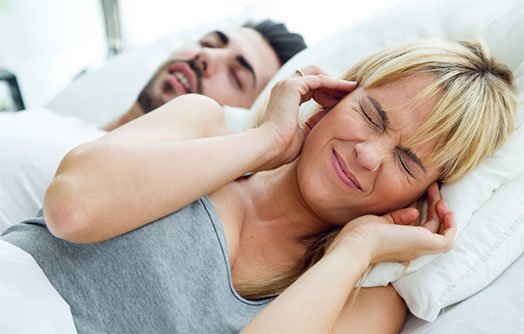
This is a sign that you may be at risk of having sleep apnoea where the tongue falls back in the throat and blocking your airway while sleeping.
The seemingly simple snoring can signal a potentially life-threatening disorder called obstructive sleep apnoea.
If left untreated, this condition can do much more damage than simply deny you and your partner a good night’s sleep.
Consult with your Melbourne CBD today!
Obstructive Sleep Apnoea
Obstructive sleep apnoea (OSA) is a condition in which breathing stops involuntarily for short periods of time during sleep.
Normally, air flows smoothly from the mouth and nose to the lungs at all times. Periods when breathing stops are called apnoea or apnoeic episodes.
In OSA, the normal flow of air is repeatedly stopped all night. The airflow stops because airway space in the throat becomes too narrow.
Snoring is characteristic of obstructive sleep apnoea. Snoring is caused by airflow squeezing through the narrowed airway space.
Untreated sleep apnoea can cause serious health problems such as:
- hypertension
- heart disease
- stroke
- diabetes
Proper diagnosis and treatment are essential to prevent complications.
Symptoms of Sleep Apnoea
The main issue with sleep apnoea is that you may not be aware of the level of your snoring or that you’re making gasping or choking noises in your sleep. If you live alone, you may be unaware that you suffer from this condition.
In some cases, heavy sleeping partners are equally unaware of your condition.
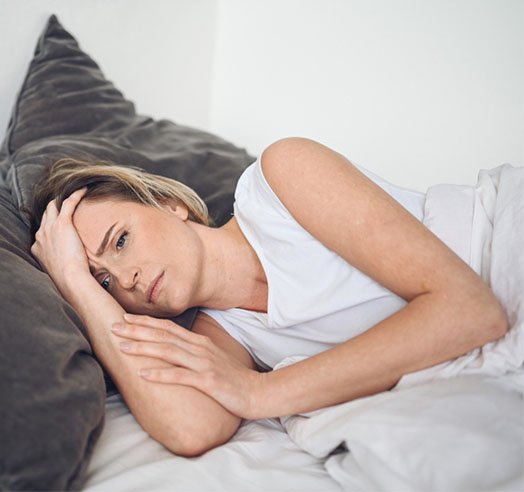
Apart from the loud snoring and episodes of gasping or choking, the symptoms of sleep apnoea include:
- Restless sleep and a sense of not having slept well
- Insomnia
- Morning headaches
- Waking up with a sore, dry throat
- Excessive daytime sleepiness and lack of energy
- Feeling drowsy during low stimulus activities (such as being a passenger in a car)
- Forgetfulness increased irritability and a decreased sex drive.
These symptoms could well be the result of other conditions such as long work hours, the side effect of medicines (such as beta-blockers, antihistamines, sleeping tablets or others), chronic fatigue, alcohol abuse – and many more.
That’s why proper diagnosis is very important.
Sleep Apnoea Diagnosis
We can screen and diagnose whether you suffer from sleep apnoea.
During the consultation, we may take a complete medical and dental history and then conduct a physical examination of your mouth, throat, and jaw.
You may also be asked to complete a sleep diary (which will be provided to you) before being referred to a sleep physician, who will conduct a thorough ‘sleep study’.
A sleep study is either performed in a dedicated sleep laboratory or may be fitted with special monitoring equipment (called a Polysomnogram) that enables you to complete the study in the comfort of your own home.
During the study, signals from your brain will be recorded together with data relating to your muscle activity and breathing. At the same time, a small bandage-like probe attached to one finger will measure the amount of oxygen in your blood.
The results from this sleep study will be analysed to determine whether you have obstructive sleep apnoea and a further course of treatment.
Treatment for Sleep Apnoea
At Art De Dente Melbourne, we can screen for obstructive sleep apnoea or refer you to dentists who do OSA appliances.
Laser-assisted uvulopalatoplasty can be performed on the pharyngeal and palatal soft tissues to diminish or eliminate the obstructions.
This nonsurgical therapy is revolutionary development in treating obstructive sleep apnea patients.
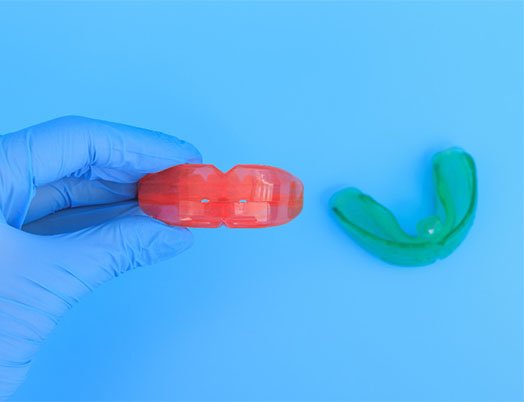
Orthotic Appliances. If you have mild to moderate obstructive sleep apnoea, oral appliances may be an effective treatment option.
These appliances, which must be fitted by a dentist or orthodontist and worn in the mouth at night, include:
Mandibular advancement device (MAD). The most widely used oral device for sleep apnoea, MADs look much like a sports mouthguard.
The devices snap over the upper and lower dental arches and have metal hinges that make it possible for the lower jaw to be eased forward.
Tongue retaining device. Used less commonly than MADs, this device is a splint that holds the tongue in place to keep the airway open.
For people with mild to moderate sleep apnoea, particularly those who sleep on their backs or stomachs, dental devices may improve sleep and reduce the frequency and loudness of snoring.
Oral devices have also been shown to control sleep apnoea long term compared to uvulopalatopharyngoplasty (UPPP), the standard surgical procedure for apnoea, in which soft tissue are removed from the back of the throat.
If you are fitted with an oral device, you should have a check-up early on to see if it is working and periodic check-ups for possible adjustment or replacement.
If you experience pain or changes in your bite, your dentist who fitted your device may be able to make modifications to correct the problem.
The best treatment for obstructive sleep apnoea depends on a number of factors, including the severity of your problem, the physical structure of your upper airway, other medical problems you may have, as well as your personal preference. Work with your dentist or sleep specialist to select the best treatment option for you.
At Art De Dente, we work with leading ENT specialists in the Melbourne CBD area who provide adjunct treatments to improve sleep.
Sleep Apnoea Treatment in Melbourne CBD
If you or a loved one is suffering from sleep apnoea, contact your Melbourne CBD dentist right away.
Call us on (03) 9642 8955 or request an appointment online. We are located at Level 17, 190 Queen Street in Melbourne CBD.
Frequently Asked Questions
What causes sleep apnoea?
Structural issues, such as a large tongue or tonsils can also increase your risk of developing the condition. Overweight people are also at an increased risk of sleep apnoea.
What are the symptoms of sleep apnoea?
Since people with sleep apnoea have disrupted sleep, they often have excessive daytime sleepiness and may have morning headaches.